 munKNEE.com Your Key to Making Money
The history of financial crises and the relationship between growth and public liabilities shows that burdens above 90% are associated with 1% lower median growth - and the United States’ debt level is currently hovering around 90% on a gross basis and 60% netting out assets.
Read More »The Motives & Incentives Driving the Current Passion For Inflation
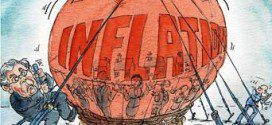
Just as the amount of outstanding debt has spiraled uncontrollably higher, so too will inflation. The hubris of central bankers who somehow believe they will know the precise time to alter easy money policies in order to prevent a monetary disaster is only exceeded by the foolishness of Congressional oversight in granting that authority. Word count: 1139
Read More »Gold Watch: Several Factors Suggest That 2013 Will Be a Very Good Year

One of our favorite charts is the oscillator which shows the probability of gold returning to its mean after a dramatic rise or fall. We believe it helps investors put the current correction in context with historical moves and determines potential buying and selling opportunities. [Here's what the oscillator chart and several other factors are telling us about the prospects for higher prices for gold in 2013.] Words: 539; Charts: 4
Read More »S&P 500: Earnings are Strong + Values are Weak = Buying Opportunity
With all the negative talk that we are consistently fed, the truth is, that corporate America is strong. The fundamentals underpinning most of our great companies warrant higher valuations than they are currently receiving. With interest rates at all-time lows, and therefore, the price of bonds at all-time highs, they are less competitive to stocks than normal. Consequently, I believe that equity valuations should be higher than normal, not lower. Therefore, I feel that now is a great time for investors to be building equity portfolios whether the market is at the total bottom or not. [Let me be more specific as to why I think that is the case.] Words: 1493
Read More »Prepare for Retirement by Owning Some Gold (+2K Views)
Gold is the constant. Its value doesn’t change. Its dollar price changes, but not its value. So when investors come to me and ask me how they can hedge against the falling value of the dollar, I always tell them to buy gold. Words: 402
Read More »